 UNIQ
Oct 19, 2026
POS security: the physical store terminal that nobody treats as a corporate endpoint
The terminal that swipes cards and checks inventory runs a full operating system, just like any laptop — but it rarely gets folded into the same patch, EDR, and inventory program that protects the rest of the company.
Endpoint protection programs at retail chains tend to cover what sits in the office well — laptops, admin desktops, back-office servers. The point-of-sale terminal on the store floor, which processes a card and checks inventory hundreds of times a day, often falls outside that same program, treated administratively as store equipment rather than an IT asset.
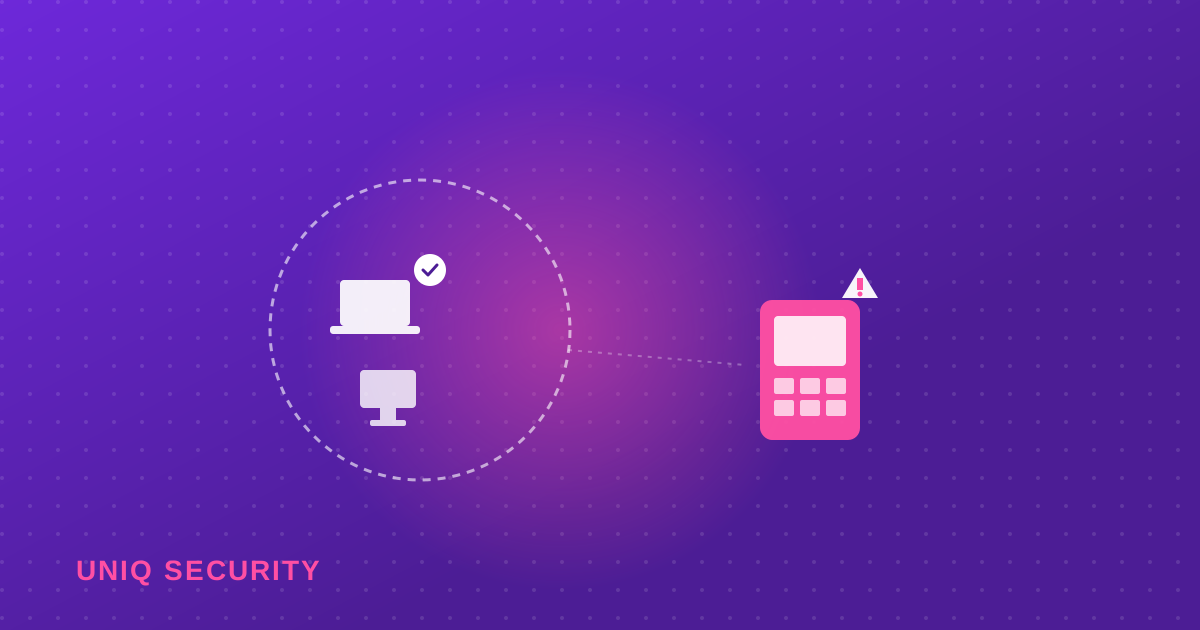
That split is organizational, not technical. Technically, a modern POS terminal runs a full operating system, connects to the corporate network, and executes real applications — it's an endpoint by the strictest definition of the word. Handling it outside the governance that protects everything else just creates an exposure point that nobody on the security team is actually watching.
A POS terminal is a computer, not store equipment
Classifying it administratively as "store equipment" usually puts the POS terminal under operations or facilities, outside the direct scope of the information security team. In practice, that means it tends to sit outside the regular patch cycle, outside the monitored asset inventory, and without the same detection agent protecting any equivalent corporate laptop.
That organizational gap is exactly the kind of blind spot that EDR alone, covering only the traditional office perimeter, doesn't solve — because the problem isn't the protection technology itself, it's that the terminal never entered the scope that technology covers.
Attacking a POS terminal doesn't take sophistication
Malware built specifically to scrape card data straight from a terminal's memory — a technique that's been known for over a decade — still works today not because it evolved, but because the terminal it targets remains under-protected relative to the rest of the corporate environment. When an attacker knows a device category is less likely to run an up-to-date detection agent, they aim there — that's a rational choice of target, not technical sophistication.
Peak season multiplies the surface, not just the traffic
Testing the security architecture ahead of a seasonal traffic spike covers infrastructure resilience — but peak season at physical retail also multiplies the number of active terminals: a temporary register, an extra kiosk, a rented card reader to cover demand. Each one is a new endpoint joining the network, and if POS onboarding isn't as rigorous as onboarding a corporate laptop, the whole fleet grows faster than visibility over it does.
Where this control fits into the architecture
The fix isn't building a separate, parallel security program just for POS terminals — it's extending the same patch, inventory, and detection standard already applied to corporate laptops to cover the store terminal too, with network segmentation isolating POS traffic from the rest of the administrative environment. That takes an organizational decision as much as a technical one: information security needs formal visibility into a device category that, at most retail networks today, has never formally belonged to them.
The terminal that sells is also the terminal that exposes
Protecting the corporate environment while leaving the store terminal out of scope only protects half of retail's real perimeter. UNIQ helps retail chains extend endpoint governance to the POS fleet before peak demand hits. Talk to the technical team to map out where that gap exists in your operation.