 UNIQ
Nov 3, 2026
Migrating an industrial historian to the cloud: what to evaluate before moving decades of data that never left the plant
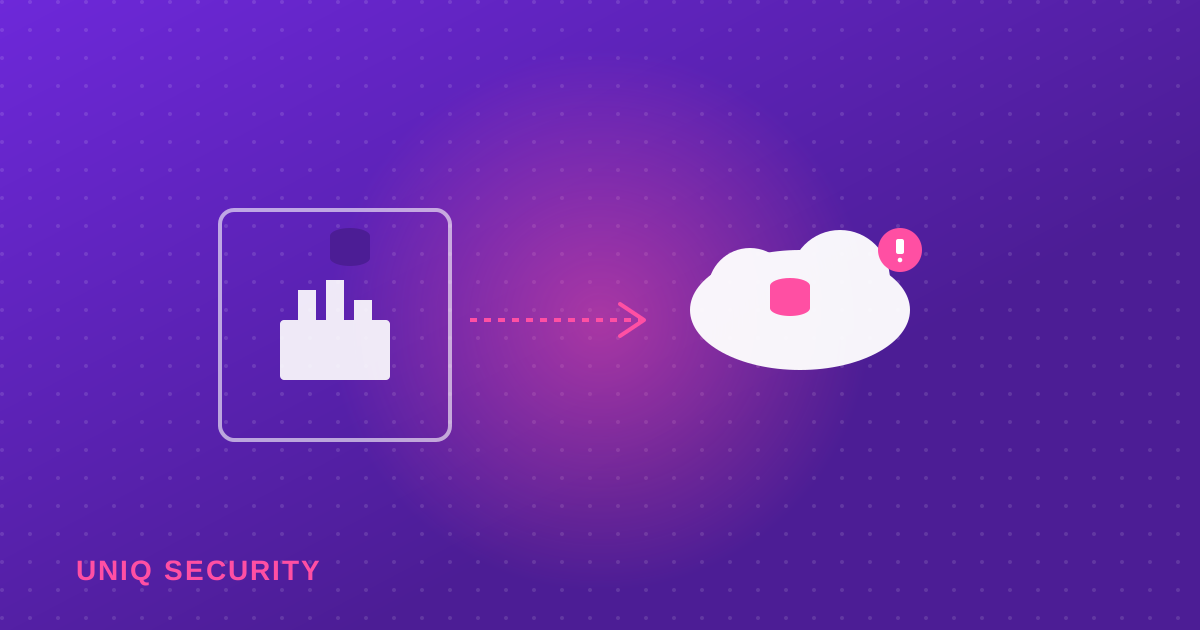
A process historian was built to stay isolated on the plant network, not exposed in the cloud. Moving that data without redesigning the trust boundary around it just carries an old assumption into an environment where it no longer holds.
Industrial plants accumulate, over decades, an enormous volume of process data — temperature, flow, pressure, continuously logged by a historian system that, historically, never left the factory's internal network. Moving that data to the cloud, to enable advanced analytics, model training, and more flexible remote access, has become a common modernization move.
What rarely gets proportional attention is that this historian was designed in an era when physical network isolation was, in practice, the primary security control — not strong encryption or granular access control. Migrating the data without redesigning that trust boundary carries an old security assumption into an environment where it simply no longer holds.
A historian was never designed to leave the plant
A typical historian system was deployed assuming the network around it already provided the necessary protection perimeter — which is why many still run old protocols, weak or nonexistent authentication, and heavy reliance on physical isolation as the primary control. Moving that system, or the data it has accumulated, to the cloud without reviewing those assumptions exposes a weakness that never had to be fixed because it was never tested against a real external threat.
Historical data reveals patterns real-time data doesn't
The same risk already covered around predictive maintenance models trained on sensor data becomes even more pronounced in historical data accumulated over years: efficiency trends, scheduled downtime patterns, production capacity evolution — information that only emerges from a long time series, with direct competitive value for whoever gains improper access to it. The more history accumulated, the more value concentrated in that data — and the greater the incentive for someone to try to reach it.
Migration isn't just moving a file, it's redesigning the trust boundary
The most common mistake in this kind of project is treating migration as a technical data-transfer operation without reviewing the trust architecture around it. That repeats, at a larger scale, the same IT/OT blind spot already covered — moving data out of the plant without redesigning segmentation, access control, and monitoring specific to this new environment just transports the vulnerability, it doesn't fix it.
Test reversibility before migrating data that will never again belong only to the plant
Once the historian migrates to the cloud, reversing that decision — bringing the data back into the original isolated environment — is rarely simple, and sometimes no longer possible without losing capability already built on top of the new architecture. Evaluating that exit scenario before migrating, not after, is part of the same due diligence exercise any critical cloud architecture decision demands.
Data that took decades to accumulate deserves more than a rushed migration
Modernizing how industrial data gets used is the right call — but it only pays off when the trust boundary around that data gets redesigned alongside the infrastructure. UNIQ helps industrial operations plan that migration securely from the start. Talk to the technical team before your next historian modernization project.